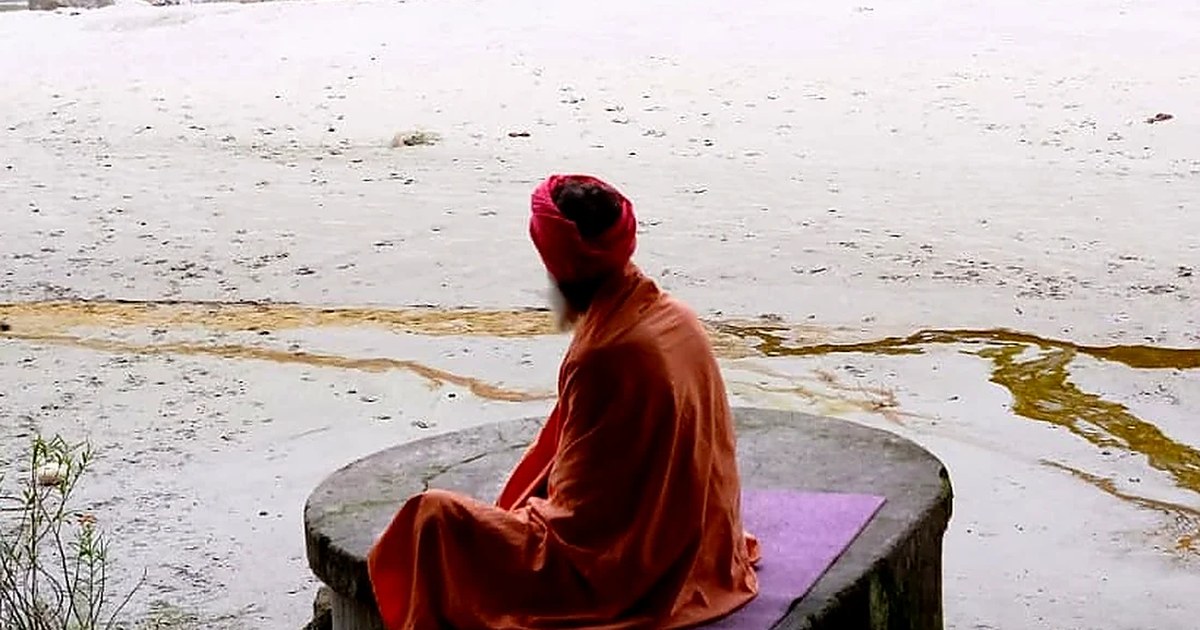
The sages said that freedom from hatred frees the mind. Somewhere along the way, that became a claim about neurons: forgive, and you will rewire your brain.
It is a lovely idea, and it is testable. So I went looking for the studies. The short version is that the behavioural evidence is reasonably good and the brain-imaging evidence is thin — and most articles you will read have those two the wrong way round.

What forgiveness actually is
Forgiveness, as researchers define it, is a reduction in resentment, hostility and the desire for revenge towards someone who has hurt you. That is all it is.
It does not mean the act was acceptable. It does not require reconciliation. It does not require trust. And it is not the same as forgetting, which is the confusion I meet most often.
| Forgiveness | Forgetting |
|---|---|
| Changes your relationship to the injury | Weakens your access to the memory |
| Works best while you remember clearly | Is not needed for healing |
| Sits comfortably alongside firm boundaries | Offers no protection at all |
| Does not require reconciliation | Tells you nothing about who is safe |
You can forgive someone completely and still decide never to be alone with them again. Keeping your distance is sometimes the wise response, and nothing in this research says otherwise.
Does practising it actually help?
This is the part that holds up.
Akhtar and Barlow reviewed the randomised controlled trials of forgiveness therapy for Trauma, Violence, & Abuse in 2016. They found fifteen trials and pooled twelve of them. Compared with people who received nothing, people who completed a forgiveness programme showed measurable improvements.
For context, a standardised mean difference of 0.5 is conventionally read as a moderate effect. Reduced anger came out at 0.49 across six trials and 517 people, and lower depression at 0.37 across six trials and 415 people. These are real, useful changes.
Two honest caveats. First, every one of these trials was judged at high risk of bias for blinding, which is close to unavoidable when the treatment is a course you obviously know you are attending. Second, the comparison was mostly against receiving nothing at all. Some of this benefit is the ordinary effect of spending structured time on a problem with someone’s attention on you, which is not nothing, but it is not specific to forgiveness either.
The anxiety result is worth dwelling on, because it shows what honest reporting looks like. The pooled number was the largest of the lot. It was also non-significant, drawn from three small trials that disagreed sharply. A less careful summary would have reported the big number and stopped.
The brain part, where the story thins out
Here is what I expected to find: a body of imaging work showing what forgiveness does to the brain. Here is what exists.
The most cited study is Ricciardi and colleagues, in Frontiers in Human Neuroscience in 2013. Participants imagined scenarios in which they were hurt, and either forgave or did not. Forgiveness was associated with activity in the left dorsolateral prefrontal cortex, the right inferior parietal lobule and parts of the temporal lobe — broadly, regions involved in reappraisal and in thinking about other minds. That is a coherent result.
It had ten participants.
It gets more interesting. The authors expected to see the anterior cingulate cortex light up, because that region is involved in emotional conflict and distress. It did not reach significance. They say so plainly, and suggest their study was simply too small to detect it.
I mention this because the anterior cingulate appears confidently in almost every popular article on the neuroscience of forgiveness, including drafts I have written myself. The main study people cite for it looked, and did not find it.
So when you read that forgiveness “rewires your brain”, understand what sits underneath: a small number of studies, with around ten to twenty people each, asking participants to imagine forgiving while lying in a scanner. Nobody has shown that a course of forgiveness therapy produces lasting structural change. There is no forgiveness centre. There probably is not one to find.
Why carrying it around does cost you something
The strongest mechanism is not about forgiveness at all. It is about rumination — the involuntary replaying of an injustice.
Michl and colleagues followed two large samples in the Journal of Abnormal Psychology in 2013: just over a thousand adolescents across seven months, and just over eleven hundred adults across a year. Stressful life events predicted later increases in rumination, and rumination in turn predicted later anxiety symptoms in both groups, and depression symptoms in the adults.
That is longitudinal evidence, which is stronger than the usual snapshot correlation, though it is still not experimental proof that rumination causes the symptoms.
It does suggest the useful distinction. Remembering an injury is not the same as replaying it. You can hold the memory clearly, learn what it taught you, and still loosen its grip on your attention. Rumination is the part worth targeting, and it is plausibly what forgiveness programmes are actually working on.
Forgiveness has a shape, and it is not a switch
The model most of the research is built on comes from Robert Enright, who treats forgiveness as a process with four phases rather than a decision you make once (Enright and Fitzgibbons, 2000). I find this the single most useful thing in the literature, because it explains why “just forgive them” fails as advice. It skips three of the four phases.
Two things worth saying about it. People do not move through these cleanly — going backwards for a week is ordinary. And the phase you are in is specific to one injury, not to you as a person. You can be deep in the fourth phase with one person and stuck at the first with someone else.
A five-minute practice
I still think this is worth doing, with the caveats above held in mind. Sit somewhere comfortable. You do not need to contact or confront anyone.
Settle. One minute. Breathe gently and notice what is happening in your body. Do not try to feel calm.
Name what is there. One minute. Say inwardly, “this is anger”, or “this is hurt.”
Separate the event from the replay. One minute. What actually happened? What am I telling myself about it, over and over? What do I need now?
Loosen the demand. One minute. Something like: I do not have to approve of what happened, and I do not have to carry this indefinitely.
Choose a boundary. One minute. Distance, a conversation, support from someone you trust, or simply more time.
One note on the second step, because the research is more interesting than the usual advice. Naming an emotion is often recommended as a universal technique. Levy-Gigi and Shamay-Tsoory tested it in PLOS ONE in 2022 and found that it reduced distress for high-intensity material — but increased distress for mild material. Their advice is to use labelling with caution when the feeling is low-level. That matches something practitioners report and teachers rarely mention: going looking for a small grievance to name can make more of it than was there.
So use that step when the hurt is genuinely large. For a minor irritation, you may do better leaving it alone.
Do not force any of this. If the injury is deep, forgiveness may take months or years, or may not be the right goal for you at all right now. Nothing in the evidence says you are failing if it does not arrive on schedule.
What I keep from the tradition
I want to be careful here, because this is exactly the join where overclaiming happens.
The teaching that one should be free of hatred is a moral and spiritual claim. It is not made true or false by an fMRI scanner, and the studies above do not validate it. What the research offers is narrower and more practical: evidence that structured work on resentment tends to reduce anger and low mood, and evidence that replaying an injury is one of the ways it keeps costing you.
The tradition and the research are asking different questions. The tradition asks what kind of person to become. The research asks what measurably changes if you try. Both are worth having, and the second does not certify the first.
What I would say is this. Forgiveness is not telling yourself you were never wounded. It is the slow discovery that the wound does not have to govern the rest of your attention. That much, at least, the evidence supports.
Where are you with it?
Twelve questions, about two minutes. It places you on the four phases above, using items built around the three motivations the research actually measures — avoidance, revenge and benevolence (McCullough and colleagues, 1998).
Answer about one specific person and one specific hurt. Answering about forgiveness in general produces a meaningless result, for the reason given above: the phase belongs to the injury, not to you.
Not loading? Open it in a new tab.
A caveat I want to put plainly, since the rest of this article has been about overclaiming. This is a reflective tool, not a validated psychometric instrument. The phases are Enright’s and the constructs are drawn from published measures, but the items are mine and the scoring bands have not been tested against anything. It is a structured way to think about where you are. It is not a test, and it does not produce a score that means anything outside this page.
If what surfaces is heavier than you expected — if the hurt is affecting your sleep, your work or your relationships — that is a reason to talk to someone qualified rather than work through it alone.